Harris Concentrated Neem Oil, 100% Cold Pressed Filtered Insecticide/Miticide/Fungicide, 12 oz Concentrate Review (2026)
Updated September 14, 2026 · Research-based review
Our verdict
Balcony and patio growers who want one bottle to cover aphids, mites and mildew fit this Harris cold pressed neem oil concentrate well. The filtered oil sprays more cleanly than unfiltered versions, and 12 oz mixes into many batches. The trade off is hand mixing with soap and warming the bottle in cool weather.
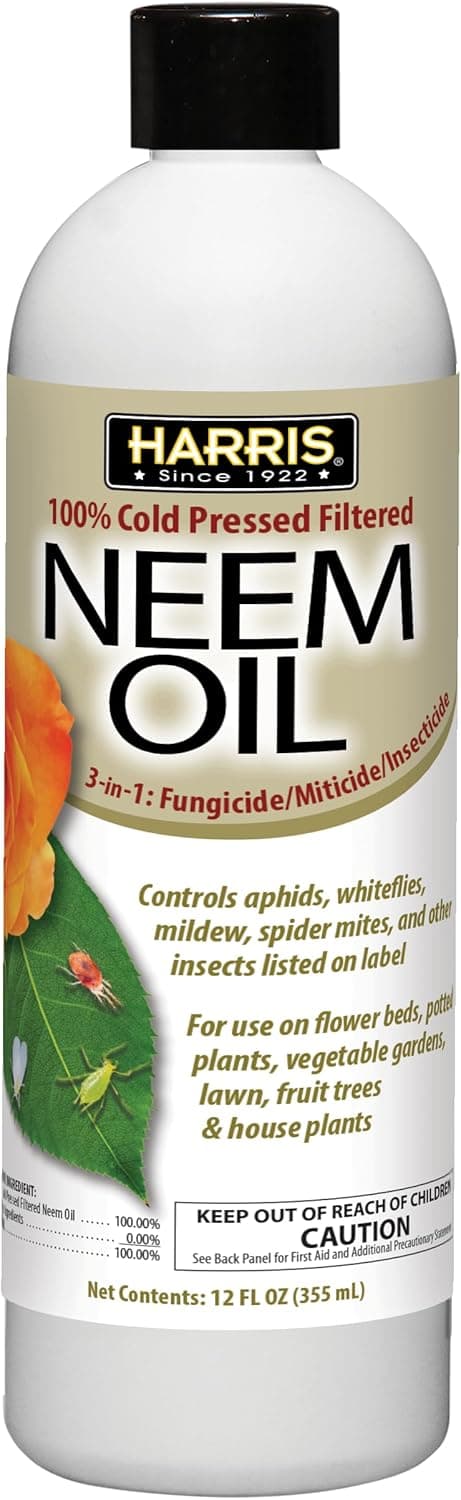
Harris concentrated neem oil, 100% cold pressed and filtered, in a 12 oz concentrate for pests and fungus.
Price range: See on Amazon
What we liked
- + Filtered cold pressed oil is less likely to clog sprayer nozzles
- + 12 oz concentrate makes many batches of spray
- + Covers insects, mites and fungal problems in one product
Trade-offs
- - Solidifies in cool temperatures, so warm the bottle before mixing
- - No mixing agent is mentioned, so add a little soap yourself
A three in one spray for a mixed balcony pest problem
This 12 oz Harris neem oil concentrate suits a balcony or patio garden dealing with more than one issue at once, since it works as an insecticide, miticide and fungicide instead of three separate bottles. It fits growers who spot aphids on new growth, fine webbing from spider mites, or the first dusty patches of powdery mildew on container tomatoes and peppers. Because it ships as a concentrate rather than a ready to use spray, it suits someone willing to measure and mix a batch in a hand sprayer rather than grab a trigger bottle and go. Our score of 8.2 out of 10 reflects that fit for mixed pest and disease problems, balanced against a formula that takes a bit more prep than a premixed spray and is not the cheapest option per ounce on the shelf.
What cold pressed and filtered actually means here
Cold pressed means the oil is extracted from neem seeds using mechanical pressure rather than heat or chemical solvents, which keeps more of the seed's natural compounds intact. Harris filters this batch, so the oil pours more evenly and is less likely to clog the narrow nozzle on a pump sprayer, a common complaint with unfiltered neem products. The active ingredient is 100 percent neem seed oil, and Harris lists it as effective against aphids, mealybugs, whiteflies, Japanese beetles, leafhoppers, thrips, fungus gnats and spider mites, along with fungal issues such as powdery mildew, black spot, scab, anthracnose and leaf spot. That range of coverage is part of why the value score sits at 9 out of 10 in the breakdown, even though fit for the job and features each land at 8 out of 10 since it still needs manual mixing.
Mixing, spraying and storing the concentrate
Harris instructions call for roughly 1 fluid ounce of concentrate per gallon of water along with a small amount of dish soap or another surfactant to help the oil bind with water, and the product label also lists a lighter spot treatment ratio of about 1 teaspoon per quart. Spray in the early morning or after the sun goes down, since neem applied in full sun on hot afternoons can scorch leaves, and aim the mist at foliage rather than open flowers to protect visiting pollinators. Harris notes the concentrate can be used through the growing season up to the day of harvest on food crops, which suits container vegetables on a balcony. In cool weather the oil can solidify or turn cloudy inside the bottle, so warm it gently before measuring out a fresh batch.
How it compares with Bonide and Safer Brand neem oils
Within the site's neem oil guide this Harris concentrate ranks third of eight, behind Bonide Captain Jack's Neem Oil, a similar 16 oz multi purpose concentrate with a broader reputation as a go to organic spray, and Safer Brand's OMRI Listed concentrate, which appeals to growers who specifically want organic certification printed on the label. Harris counters with a lower price per ounce and a filtered formula that sprays more cleanly, which shows up in its 9 out of 10 value score. The trade off appears in daily use: Harris does not include a built in mixing agent the way some newer neem products do, so soap has to be added by hand every time, and the oil needs warming in cold weather before it blends smoothly into a batch.
Verdict and who should pick a different neem oil
For a balcony or patio grower who already keeps a hand sprayer and dish soap on hand and wants one concentrate that handles most common pests and fungal problems, this Harris neem oil is a solid, budget friendly pick that backs up its 8.2 out of 10 overall score. Growers who want organic certification specifically should look at the Safer Brand OMRI Listed version instead, and anyone who would rather skip measuring altogether may prefer a ready to use spray such as Harris' own 20 oz trigger bottle. Whichever bottle ends up in the cart, follow the product label for exact dilution rates and any food crop harvest intervals rather than relying on general advice found online.
Frequently asked questions
Does this neem oil concentrate go bad or expire in the bottle?
Neem oil concentrate can solidify, turn cloudy or separate in cool storage, which is normal. Warming the bottle and shaking it usually restores it, and it is worth checking the label for specific shelf life guidance rather than judging by appearance alone.
Can I spray this neem oil on tomatoes and peppers I plan to eat?
Harris states the concentrate can be used on food crops through the growing season up to the day of harvest, but always follow the exact dilution and application instructions printed on the product label.
Why did my neem oil clog the sprayer nozzle?
Clogging is more common with unfiltered neem oils. Harris filters this batch specifically to reduce that problem, though mixing a fresh batch each time and straining older concentrate can help if a nozzle still clogs.
How often should I reapply neem oil to balcony plants?
Harris' guidance points to regular applications through the pest season rather than a single spray, timed for cool mornings or evenings to avoid leaf scorch. Check the label for an interval that matches your specific pest or disease pressure.
Prices change often, so check the current price and availability on Amazon.
Check price on AmazonBalcony Garden Picks may earn a commission from the link above.