Down To Earth Organic Vegetable Garden Fertilizer 4-4-4, 5 lb Review (2026)
Updated September 14, 2026 · Research-based review
Our verdict
Down To Earth's 4-4-4 is a solid all-purpose organic granular feed for balcony and patio vegetable containers, earning our score of 8.4 out of 10. The balanced ratio suits leaves, roots and fruit alike, though as a slow-release granular it will not green up plants overnight.
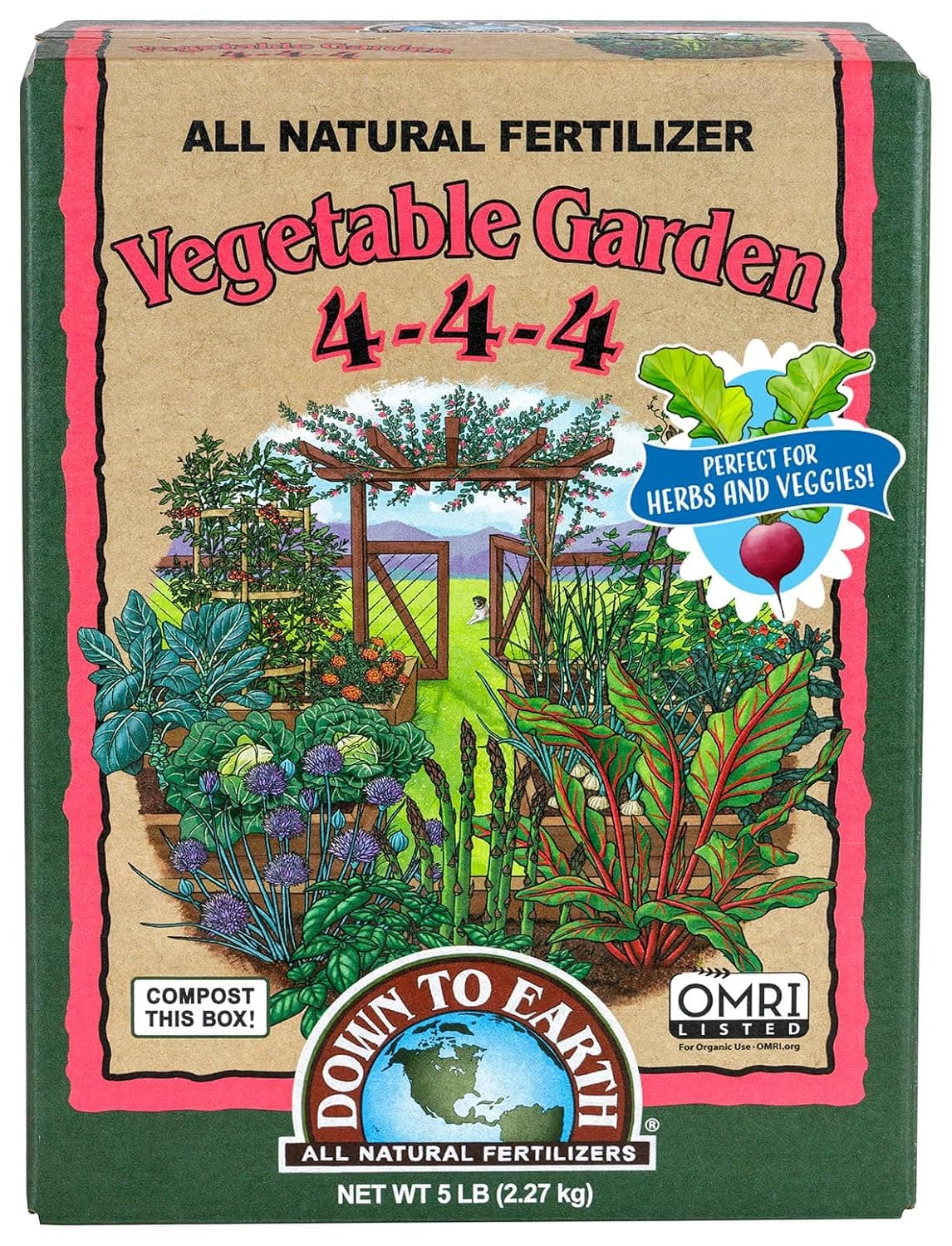
Down To Earth organic vegetable garden fertilizer, a balanced 4-4-4 granular feed in a 5 lb box.
Price range: $ (Budget)
What we liked
- + Balanced 4-4-4 ratio supports leaves, roots and fruit evenly
- + Down To Earth is a well-regarded organic fertilizer brand
- + 5 lb box covers many container feedings across a season
Trade-offs
- - Granular organic feeds release slowly, so results are not instant
- - Can have a noticeable smell right after application
Who this feed is built for
This is an option for anyone growing vegetables, herbs or greens in containers, raised beds or a small in-ground plot on a balcony or patio and who wants one bag that covers most of a season. Down To Earth has a long history as an organic fertilizer brand, and its Vegetable Garden 4-4-4 formula is aimed squarely at edible crops rather than lawns or ornamentals. Because it is a granular, soil-applied product, it fits people who are comfortable working a feed into the top few inches of soil rather than mixing and spraying a liquid. It is less suited to hydroponic setups or anyone who wants a fast-acting boost right before harvest, since granular organic fertilizers build fertility gradually over the growing season instead of delivering an instant spike of nutrients.
What the 4-4-4 blend is made of
The 4-4-4 label means roughly equal parts nitrogen, phosphorus and potassium, a balance meant to support foliage, root development and fruiting at the same time rather than pushing any one of the three. Down To Earth formulates the product from fish bone meal, alfalfa meal, feather meal, langbeinite, basalt, potassium sulfate, dolomite and kelp meal, a mix of animal, mineral and marine sources typical of organic blended fertilizers. The product is listed with the Organic Materials Review Institute for use in organic production, which matters to gardeners who want to keep their vegetable beds certifiable or simply avoid synthetic inputs. Because the nutrients come from these raw materials rather than water-soluble salts, the fertilizer needs soil microbes and moisture to break it down before roots can take it up.
Working it into a container routine
The maker's guidance calls for 3 to 6 pounds per 100 square feet of bed, which for balcony-sized containers usually works out to a modest handful mixed into the top layer of soil at planting, with a top dressing partway through the season. For new transplants, the label points to roughly 1 to 2 tablespoons worked into each planting hole before the seedling goes in. A 5 pound box is enough for several containers or a small raised bed across a spring and summer growing cycle rather than a single application. Expect a mild organic, earthy smell right after you work the granules into the soil; it fades within a day or two and is a normal trait of fish and feather meal based feeds, not a sign anything is wrong.
How it stacks up against a liquid rival
Within our best organic fertilizer guide, this granular 4-4-4 ranks just ahead of AgroThrive's Fruit and Flower liquid 3-3-5, and the two make a useful contrast. Down To Earth's granular format is a mix-and-forget option that feeds slowly over weeks, which suits people who do not want to remember a weekly watering can routine. AgroThrive's liquid, by contrast, is diluted in water and applied on a set schedule, so it reaches roots faster and leans more toward potassium for fruiting crops like tomatoes and peppers. Neither is strictly better; the granular formula favors low-maintenance feeding of a mixed vegetable and herb container garden, while the liquid suits growers chasing heavier fruit set who do not mind mixing a watering can every week or two.
Verdict and who might look elsewhere
For a balcony or patio vegetable grower who wants a single organic product that covers leafy greens, herbs, tomatoes and peppers without a mixing routine, this 4-4-4 blend is an easy recommendation and matches its 8.4 score with a genuinely balanced, OMRI listed formula. Gardeners who need a quick nutrient correction on a struggling plant, or who are growing in a hydroponic or purely liquid-fed system, should look at a liquid feed such as AgroThrive instead, since granular organic fertilizers take time to break down. Anyone with very little container space may also find a smaller package size a better fit than committing to a full 5 pound box.
Frequently asked questions
How often should I apply this fertilizer to container vegetables?
Down To Earth's label calls for working 3 to 6 pounds per 100 square feet into the soil at planting, with a top dressing partway through the season for heavier feeders, so most containers only need an application every few weeks rather than weekly.
Does it smell bad after applying it?
It has a mild earthy odor typical of fish bone meal and feather meal blends right after application, which is normal and fades within a day or two once it is worked into the soil.
Is this fertilizer certified organic?
It is listed by the Organic Materials Review Institute for use in organic production, which is the standard reference organic growers use to check inputs.
Will it work fast enough to fix a struggling plant right away?
Not really. As a granular slow-release feed it needs soil moisture and microbial activity to break down, so a liquid fertilizer is a better choice when you need a quick nutrient correction.
Prices change often, so check the current price and availability on Amazon.
Check price on AmazonBalcony Garden Picks may earn a commission from the link above.