AgroThrive Fruit and Flower Organic Liquid Fertilizer 3-3-5 (1 Gal) Review (2026)
Updated September 14, 2026 · Research-based review
Our verdict
AgroThrive's Fruit and Flower liquid, a 3-3-5 organic formula in a 1 gallon jug, is built for balcony growers chasing heavier tomatoes, peppers and blooms, and it lands second in our organic fertilizer guide at 8.4 out of 10. Its potassium-forward ratio and liquid format reach roots fast, though the jug takes up real storage space.
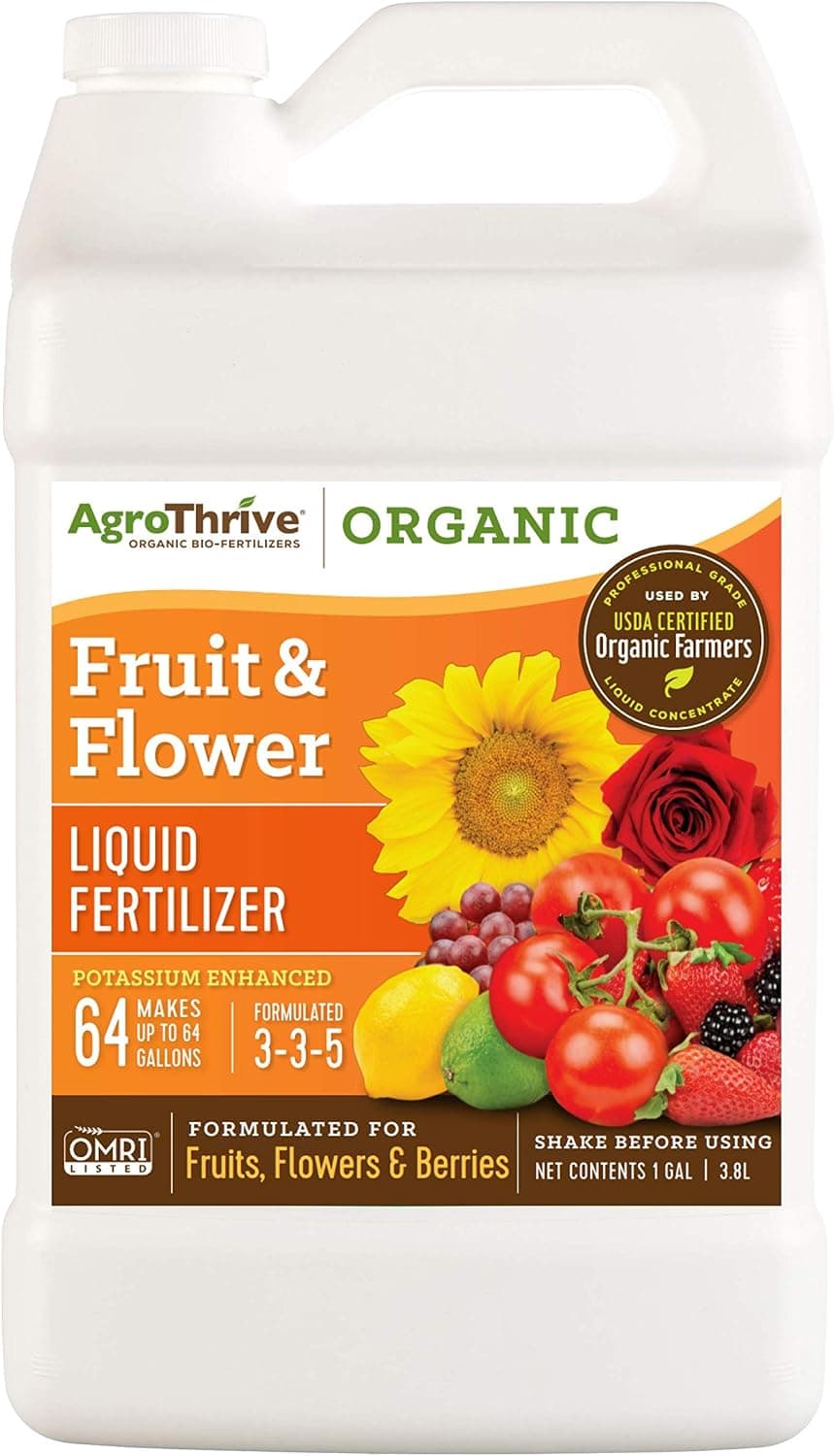
AgroThrive's fruit and flower organic liquid fertilizer, a 3-3-5 formula in a 1 Gal jug.
Price range: $ (Budget)
What we liked
- + 3-3-5 ratio leans toward potassium for fruiting and flowering
- + Liquid format absorbs quickly after watering
- + 1 Gal jug covers tomatoes and peppers through the season
Trade-offs
- - A gallon jug takes up storage space in small apartments
- - Formula is targeted at fruit and flowers, not leafy greens
Who this liquid fertilizer suits
This is a fit for balcony and patio growers who are already raising fruiting or flowering plants, tomatoes, peppers, strawberries or container roses, and want a liquid feed they can mix into a watering can rather than work into the soil. AgroThrive markets it for fruits, flowers, vegetables, greenhouses and herbs, and the potassium-heavy 3-3-5 ratio is specifically aimed at supporting bloom and fruit development rather than leafy growth alone. Because it is a liquid concentrate, it suits growers comfortable with a weekly or biweekly mixing routine, including those running simple hydroponic or wicking setups on a balcony. Anyone mainly growing leafy greens or herbs where nitrogen matters more than potassium may be better served by a more nitrogen-forward feed.
What the 3-3-5 formula is made from
AgroThrive's label lists corn steep liquor, fermented fish by-products and sulfate of potash as the main nutrient sources behind the 3-3-5 nitrogen-phosphorus-potassium ratio, with the extra potassium meant to support better fruit set and more vibrant flowers compared with an even, all-purpose blend. The company describes the product as going through a fermentation based digestion process that breaks the raw materials down into a form plant roots can take up quickly once it is watered in, rather than waiting on soil microbes to slowly release nutrients. The fertilizer is suitable for organic production and is OMRI, CDFA and WSDA listed, which matters to growers who want documentation that a liquid feed meets organic standards for edible crops.
Mixing it into a balcony feeding routine
AgroThrive's directions call for mixing about 2 ounces of concentrate per gallon of water for younger starter plants, applied weekly, stepping up to about 4 ounces per gallon for mature plants applied every 1 to 2 weeks. It can be used as a soil drench or foliar spray and is also compatible with simple hydroponic systems, which gives balcony growers some flexibility depending on how their containers are set up. A 1 gallon jug is a substantial amount of concentrate for most balcony setups and will outlast a single growing season for a handful of containers, though the jug itself takes up noticeably more shelf or storage space than a small fertilizer box. The maker recommends keeping the concentrate capped between uses.
How it compares with a granular all-purpose feed
In our organic fertilizer guide this liquid sits just behind Down To Earth's granular 4-4-4 vegetable blend, and the two serve different habits more than one being simply better. The granular option is a mix-into-the-soil-and-forget approach that releases nutrients slowly over weeks, while AgroThrive's liquid needs a recurring mixing and watering routine but reaches roots faster and leans toward potassium for fruiting and flowering. Growers who want one product to handle a mixed vegetable and herb garden with minimal fuss tend to prefer the granular route, while those focused specifically on getting more tomatoes, peppers or blooms out of established plants often lean toward a liquid like this one.
Verdict and who might pick something else
For balcony growers already raising fruiting or flowering plants who do not mind a regular mixing routine, AgroThrive's Fruit and Flower liquid backs up its 8.4 score with a potassium-forward formula and organic listings that suit edible container gardens. Anyone short on storage space, or growing mostly leafy greens and herbs where nitrogen matters more than potassium, may be better off with a compact granular all-purpose fertilizer instead. Beginners who would rather not measure concentrate into a watering can every week or two should also weigh a slow-release granular product before committing to this jug.
Frequently asked questions
How much AgroThrive Fruit and Flower fertilizer do I mix per gallon?
The label calls for about 2 ounces of concentrate per gallon of water for starter plants applied weekly, stepping up to about 4 ounces per gallon for mature plants applied every 1 to 2 weeks.
Is this fertilizer organic certified?
AgroThrive states the product is suitable for organic production and is OMRI, CDFA and WSDA listed, which growers can use to confirm it meets organic standards.
Can I use it in a hydroponic balcony setup?
Yes, the maker lists soil drench, foliar feeding and hydroponic systems as compatible application methods, so it can work in simple container hydroponic setups.
How does it compare with a granular vegetable fertilizer?
It reaches roots faster because it is already liquid and needs regular mixing, while a granular feed like a 4-4-4 blend releases nutrients more slowly with less frequent attention, so the choice depends on how much mixing routine you want.
Prices change often, so check the current price and availability on Amazon.
Check price on AmazonBalcony Garden Picks may earn a commission from the link above.