XLUX Long Probe Plant Soil Moisture Meter, Battery-Free Review (2026)
Updated September 20, 2026 · Research-based review
Our verdict
Well suited to deep pots and planters, since the extended probe can reach root level where a standard short probe cannot, and it needs no batteries. Readings are a simple three-zone guide rather than a precise percentage, and it works best as a quick check-in tool rather than a permanent sensor.
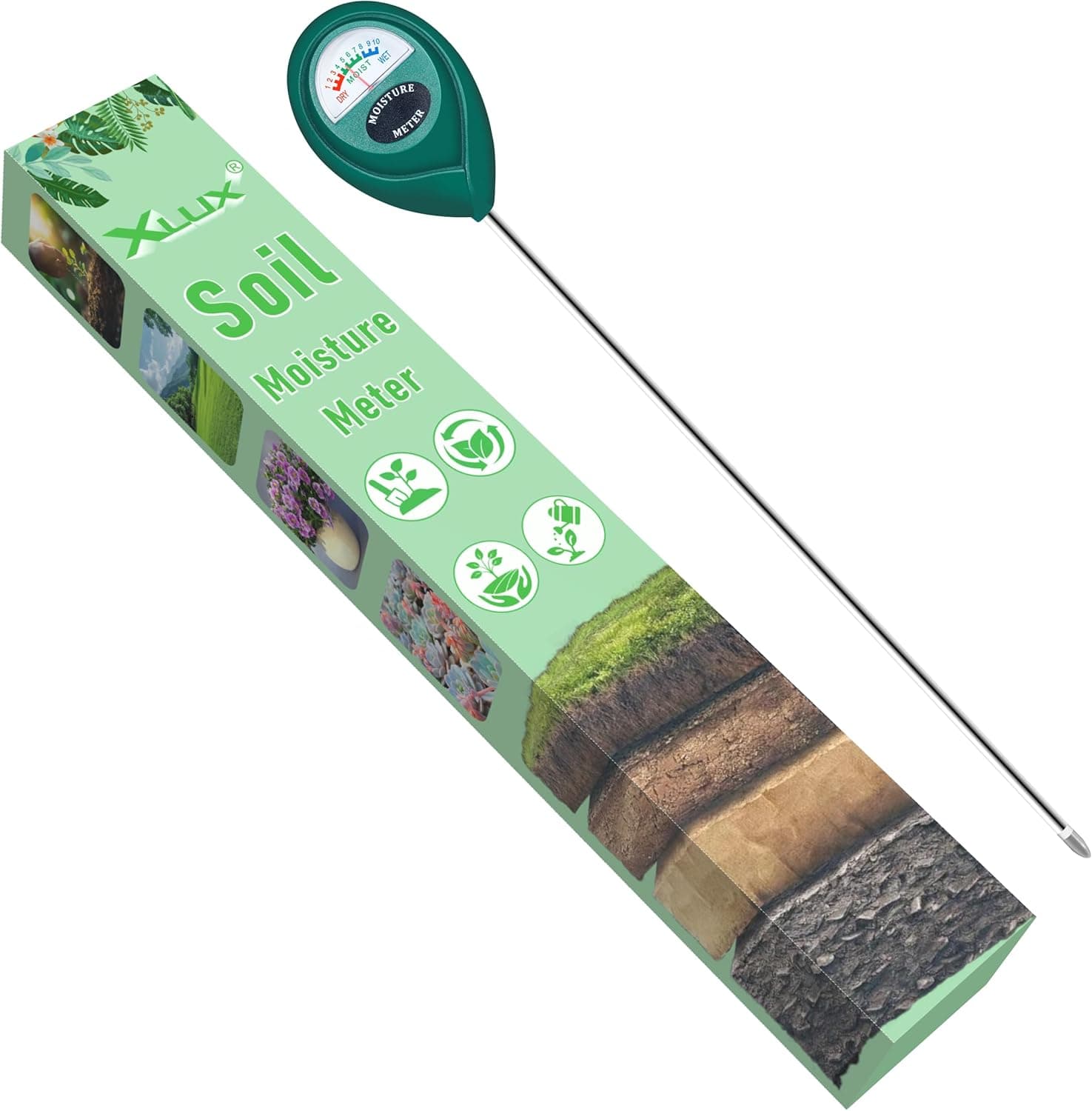
XLUX's battery-free long probe plant soil moisture meter for checking deep pots and planters.
Price range: See on Amazon
What we liked
- + Long Probe reaches the root zone in deep containers
- + Battery-Free design means it is always ready to use
- + Simple dial reading helps avoid overwatering
Trade-offs
- - Long probes can be hard to push into dry compacted soil
- - Readings are approximate rather than precise
Who this moisture meter suits
This is a long-probe version of XLUX's soil moisture meter, built for deep containers, planters, and raised beds where a standard short probe only reads the surface layer of soil rather than the zone around the roots. That makes it most useful for anyone growing in tall pots, large balcony planters, or garden beds where the top inch of soil can look and feel dry while the root zone underneath is still damp, a common cause of overwatering. Someone with only small, shallow pots may not need the extra probe length and could get by with a standard, shorter version instead.
How it works without batteries
The meter operates through galvanic action, a chemical reaction between the probe and the moisture in the soil that generates a very small amount of electrical current on its own, which is what moves the needle on the dial. Because of this, the meter never needs batteries or charging, and the reading appears as soon as the probe makes contact with moist soil, with no waiting period for the sensor to stabilize. This is the same basic mechanism used across XLUX's moisture meter line, and it is a large part of why these meters have stayed popular as a low-maintenance, no-electronics option.
Probe design and reach
The probe is made from anti-rust 304 stainless steel, and this long-probe version extends further into the soil than XLUX's standard meter, specifically aimed at reaching the bottom of larger and deeper flower pots where roots concentrate. A single probe design, rather than a double or multi-prong sensor, is described as causing less physical disturbance to roots when it is pushed in and pulled back out, which matters more in a mature potted plant with an established root ball than in loose garden soil. The stainless steel construction also resists the kind of pitting that a plain metal probe can develop after repeated contact with damp soil over a season.
Reading the dial
The display uses a large dial split into three zones across ten scale marks, intended to give an at-a-glance read of dry, moist, or wet soil rather than an exact moisture percentage. The maker also cautions against leaving the probe in the soil for more than about five minutes at a time, since the metal tip can gradually corrode with prolonged contact, which reinforces that this is meant as a quick check-in tool, insert, read, and remove, rather than something left in the pot permanently. Checking once every few days at a few spots around a large planter gives a more reliable sense of overall moisture than a single reading.
How it compares to other moisture meters
In the site's Best Moisture Meters guide this long-probe model ranks second of six, just behind XLUX's own upgraded stainless steel probe version, and ahead of no-battery meters from Dr.meter, Censinda, and other brands. Against XLUX's shorter, higher-ranked model, the extra probe length here is the main differentiator, and it is the more sensible pick specifically for deep planters, while the shorter version may suit smaller, shallower pots just as well at a similar price point. Either way, a battery-free galvanic meter is a cheaper long-term option than an electronic sensor that needs periodic battery changes.
Frequently asked questions
Does this moisture meter need batteries?
No, it works through galvanic action, drawing a small amount of energy from soil moisture, so it never needs batteries or charging.
How long can I leave the probe in the soil?
The maker advises not leaving it in for more than about five minutes, since the metal tip can gradually corrode with prolonged contact.
What is the probe made of?
An anti-rust 304 stainless steel probe.
How precise is the reading?
It shows a general dry, moist, or wet zone across a ten-mark dial rather than an exact percentage, and the needle moves as soon as the probe touches damp soil.
Prices change often, so check the current price and availability on Amazon.
Check price on AmazonBalcony Garden Picks may earn a commission from the link above.