POROLIR Seed Starter Tray 10PCS Kit with Heightened Lids (12 Cells/Tray) Review (2026)
Updated September 14, 2026 · Research-based review
Our verdict
A solid choice for seed starting when you want extra headroom under the lid for seedlings to stretch before they need transplanting. The ten-tray kit with its own lid on each unit works well for staggered sowing through a season, though the taller lids do take up more storage space once the season ends.
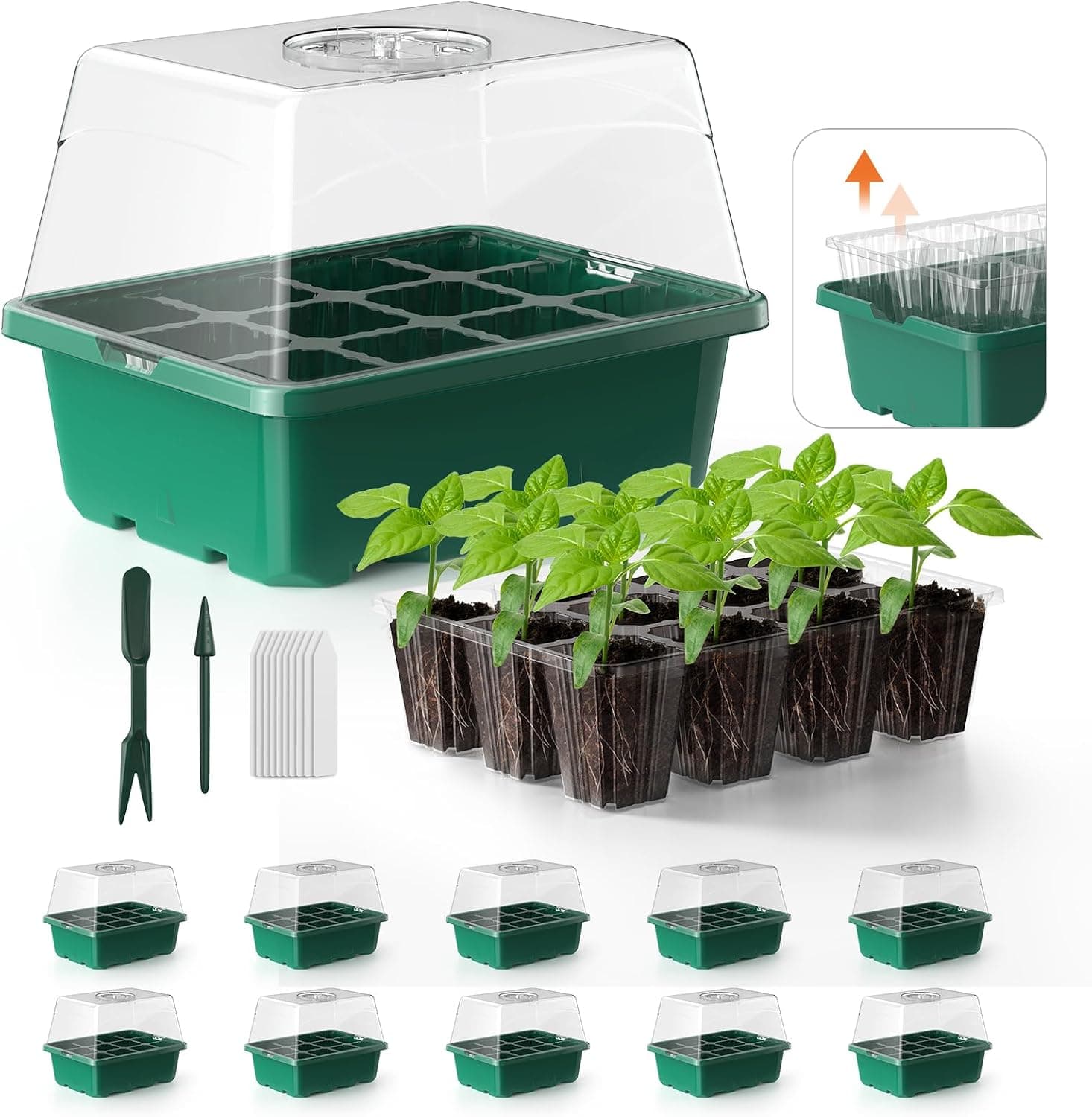
POROLIR's 10PCS seed starter tray kit with heightened lids and 12 cells per tray for taller seedlings.
Price range: $ (Budget)
What we liked
- + Heightened Lids leave headroom for seedlings to grow under cover
- + 10PCS kit gives lots of trays for staggered sowing
- + 12 cells per tray allow sturdy, well-rooted transplants
Trade-offs
- - Tall lids make the trays bulkier to store off-season
- - Check whether soil or labels are included in the kit
Who this kit fits
This POROLIR kit suits a grower who wants to start seeds in batches over several weeks rather than sow everything at once, since ten independent trays make it easy to stagger sowing dates and keep each batch on its own timeline. With twelve cells per tray, the individual cells are larger than kits packing twenty or more cells into the same footprint, giving young roots more room before transplanting becomes necessary. The heightened lids are a useful feature for anyone growing seedlings that get a bit taller before they are ready to move outdoors, since a standard low dome can crowd fast-growing starts. It is less suited to someone who wants to start the maximum number of seeds in a small space, since the larger twelve-cell layout trades cell count for extra room per seedling.
Design and materials explained
Each tray in the kit measures roughly 13.2 inches long and 10 inches wide, with the tray body itself about 1.6 inches high before adding the heightened lid on top, according to product listings for this kit. The trays are made of a reusable, recyclable plastic material described as durable for repeat use across growing seasons rather than a single-use design. The clear construction lets you check on root and shoot development without lifting the lid each time, which reduces disturbance to the humid environment building up inside. The heightened lid is the standout design choice here compared with standard flat dome kits, giving seedlings more vertical room to grow under cover before the lid needs to come off entirely.
Setting it up and running it through a season
Fill each tray's cells with a seed starting mix, sow seeds according to the packet depth guidance, and fit the heightened lid on top to hold in humidity and warmth while germination gets underway. Because the lid sits taller than a standard dome, seedlings can grow for longer under cover before you need to remove it, which is useful for slower-germinating varieties or crops you want to hold indoors a bit longer before hardening off. With ten separate trays, a staggered sowing schedule works well, starting a new tray every week or two so transplants are ready in a steady sequence rather than all arriving at once. The taller lids are bulkier to stack and store between seasons than flat dome trays, so plan for a bit more storage space if you keep the kit from year to year.
Trade-offs and how it compares
The main trade-off is cell count versus cell size, since twelve larger cells per tray means fewer total seedlings per tray than a kit built around smaller, more numerous cells. Against the MIXC 10-pack kit, which fits one hundred twenty smaller cells across its ten trays for a higher total seedling count, this POROLIR kit favors fewer, roomier cells and taller lid clearance instead. Compared with the Gardzen 5-set kit and its two hundred cells across five trays with vented domes, this kit again trades raw cell count for the heightened lid design, which suits growers who value headroom over maximum seedling volume in a single kit.
Verdict and who should pick something else
This kit is a good fit for a grower who wants larger cells and extra headroom for seedlings across a staggered sowing schedule, matching our score of eight point two out of ten for fit and features. Choose a smaller-cell kit instead if starting the maximum number of seeds in one tray matters more than cell size, since options like the MIXC or Gardzen kits pack in significantly more cells per tray. Growers tight on off-season storage space should also weigh the bulkier heightened lids against flatter dome designs that stack more compactly when not in use.
Frequently asked questions
How many cells does each tray have?
Each tray has twelve cells, larger than many seed starting trays that pack in twenty or more smaller cells in the same footprint.
What makes the lids on this kit different?
The lids are heightened compared with a standard flat dome, giving seedlings more vertical room to grow under cover before the lid needs to come off.
Can I reuse these trays next season?
The trays are made of reusable, recyclable plastic intended for repeat use across growing seasons rather than a single-use design.
Is this kit better for a lot of small seeds or fewer larger ones?
With twelve larger cells per tray, it favors growers who want fewer, roomier cells over a kit built around maximizing total cell count.
Prices change often, so check the current price and availability on Amazon.
Check price on AmazonBalcony Garden Picks may earn a commission from the link above.